Sunday, February 21, 2010

Akshardham

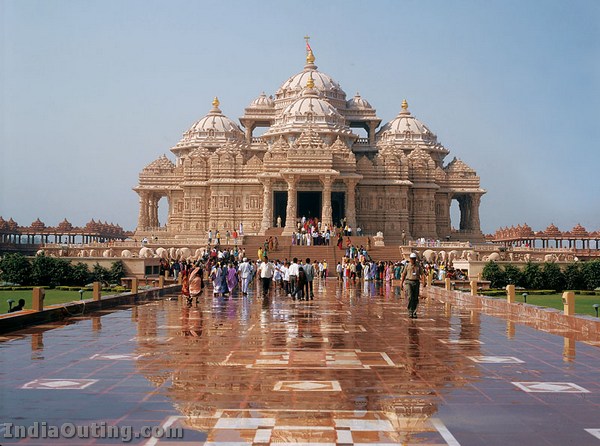
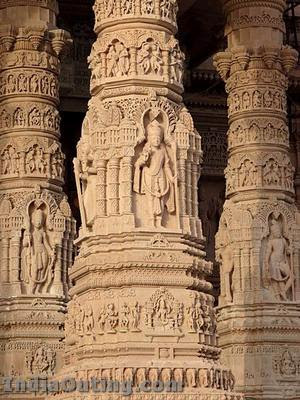
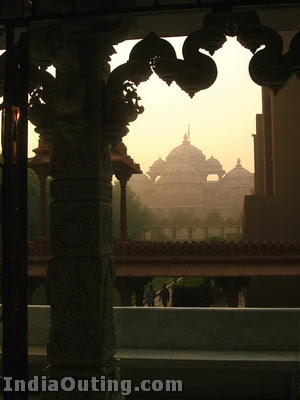
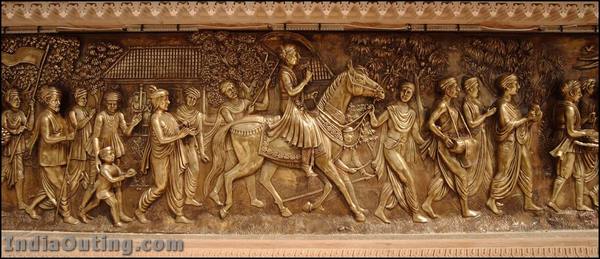
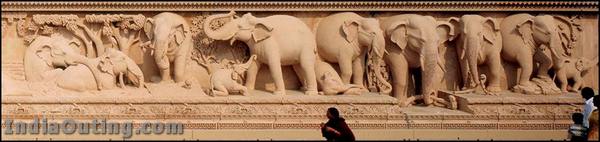
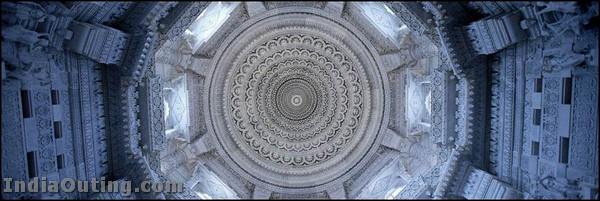
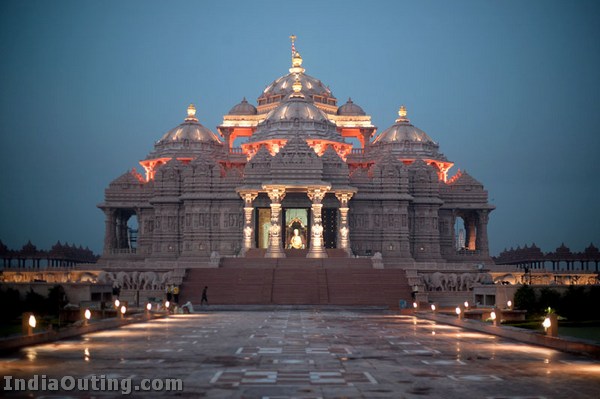
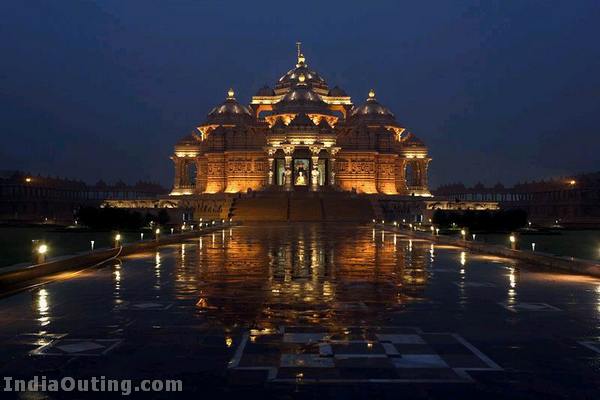
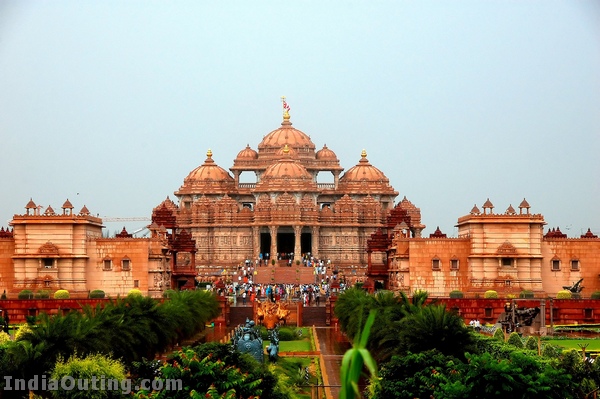
Akshardham is a Hindu temple complex in Delhi, India. Also referred to as Delhi Akshardham or Swaminarayan Akshardham, the complex displays 10,000 years of traditional Indian and Hindu culture, spirituality, and architecture. The building was inspired and moderated by Pramukh Swami Maharaj, the spiritual head of the Bochasanwasi Shri Akshar Purushottam Swaminarayan Sanstha, whose 3,000 volunteers helped 7,000 artisans construct Akshardham.

The temple, which attracts 70 percent of all tourists who visit Delhi, was officially opened on 6 November 2005. It sits on the banks of the Yamuna River adjacent to the proposed 2010 Commonwealth Games village. The monument features a large central monument crafted entirely of stone, exhibitions on incidents from the life of Bhagwan Swaminarayan and the history of India, an IMAX feature, a musical fountain, and large landscaped gardens.
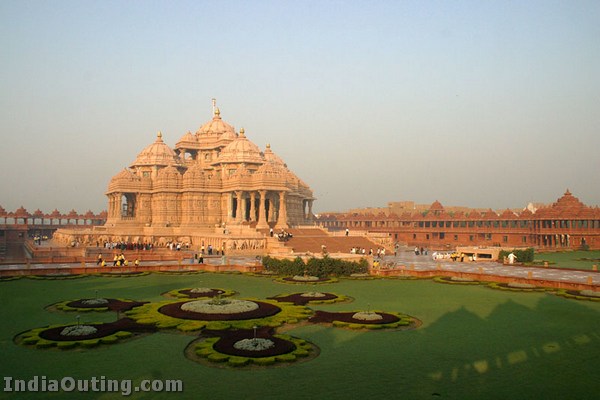
Akshardham

History

The building had been planned since 1968 as a vision of Yogiji Maharaj. Yogiji Maharaj, the spiritual head of the BAPS Swaminarayan Sanstha at the time, expressed his desire for wanting a grand temple built on the banks of the Yamuna river, to two or three devotee families of Swaminarayan Bhagwan that resided in New Delhi at the time. Attempts were made but little progress happened, and by 1971 Yogiji Maharaj passed away. By 1982, Pramukh Swami Maharaj, who was next in line as the spiritual head of BAPS, started to continue fulfilling the dream of his guru, Yogiji Maharaj, and prompted the devotees to look into the possibility of building the temple in Delhi. A request for the plan was put forward to the Delhi Development Authority (DDA), and several different places were suggested, such as Ghaziabad, Gurgaon and Faridabad.
Akshardham Akshardham

Akshardha

Get in

It is situated on NH 24, Noida Mor, New Delhi, India. You can reach there by metro, taxi, auto rickshaws
Akshardham

See

  • Hall of Values Named Sahajanand Pradarshan, the Hall of Values features life-like robotics and dioramas which display incidents from Bhagwan Swaminarayan’s life, portraying his message of peace, harmony, humility, service to others and devotion to God. The hall features the world’s smallest animatronic robot in the form of Ghanshyam Maharaj, the child form of Bhagwan Swaminarayan.
  • Theatre Named Nilkanth Kalyan Yatra, the theatre houses Delhi’s first and only large format screen, measuring 85-foot (26 m) by 65-foot (20 m). The theatre shows a film especially commissioned for the complex, Nilkanth Yatra, to recount the journey Bhagwan Swaminarayan made during his teenage years throughout India. An international version of the film called Mystic India was released in 2005 at IMAX and giant screen cinemas worldwide. A 27-foot (8.2 m) tall bronze statue of Nilkanth Varni is outside the theatre.
Akshardham

Akshardham

  • Boat ride Named Sanskruti Vihar, this ride takes visitors on a journey through 10,000 years of Indian history in approximately 10 minutes. Visitors sit in specially designed peacock shaped boats that make their way around an artificial river, passing the world’s first university, chemistry laboratories, ancient hospitals, and bazaars, finally ending with a message for the future of India.
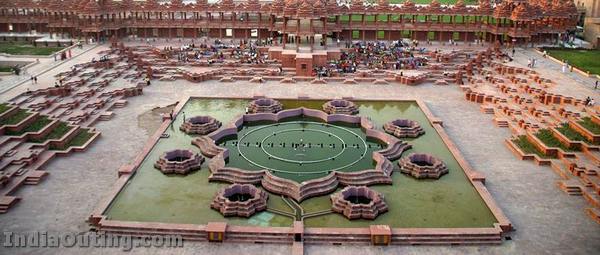
  • Musical fountain Known as the Yagnapurush Kund, it is India’s largest step well. It features a very large series of steps down to a traditional ‘yagna kund’. During the day, these steps provide rest for the visitors to the complex and at night, a musical fountain show representing the circle of life is played to an audience which is seated on the same steps. The fountain is named after the founder of the Hindu organization, Shastriji Maharaj.
Akshardham

Akshardham

  • Garden of India Also known as the Bharat Upavan, this garden has lush manicured lawns, trees, and shrubs. The garden is lined with bronze sculptures of contributors to India’s culture, including Children of India, Women of India, and Heroes of India.
  • Other features
  • The Yogi Hraday Kamal – This sunken garden, shaped like a lotus when viewed from above features large stones engraved with quotes from world luminaries ranging from Shakespeare and Martin Luther King, to Swami Vivekananda and Bhagwan Swaminarayan.
  • Neelkanth Abishek – Devotees offer abhishek, a ritual of pouring water on to the murti of Nilkanth Varni and express their reverence and prayers for spiritual upliftment and fulfillment of wishes.
  • Narayan Sarovar – A lake that surrounds the main Akshardham monument. The lake contains holy waters from 151 rivers and lakes sanctified by Bhagwan Swaminarayan, including Mansarovar. Surrounding the Narayan Sarovar are 108 gaumukhs, symbolizing Janmangal Namavali or the 108 names for god, from which holy water issues forth.
  • Premvati Ahargruh – A vegetarian restaurant modeled on the Ajanta and Ellora caves in Maharashtra, India and an Ayurvedic bazaar.
  • AARSH Centre – Short for Akshardham Centre for Applied Research in Social Harmony, this center, by study-action, will apply research of social harmony and more topics related to this.
Akshardham

Akshardham

Monday, February 15, 2010

Tour of Srinagar

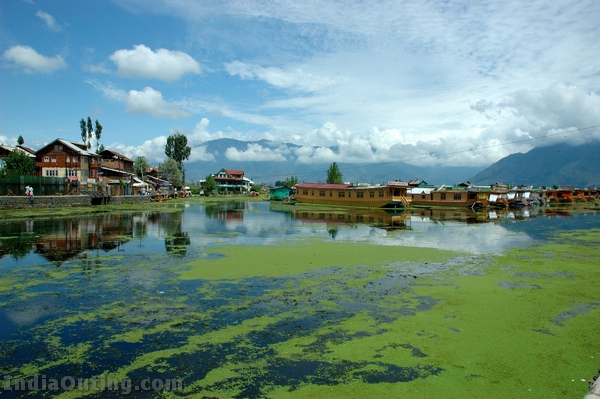
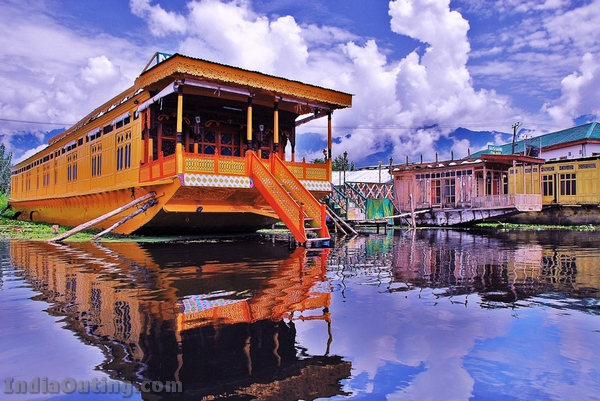
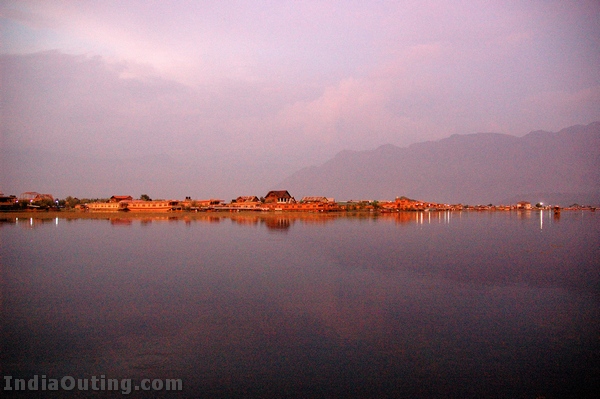
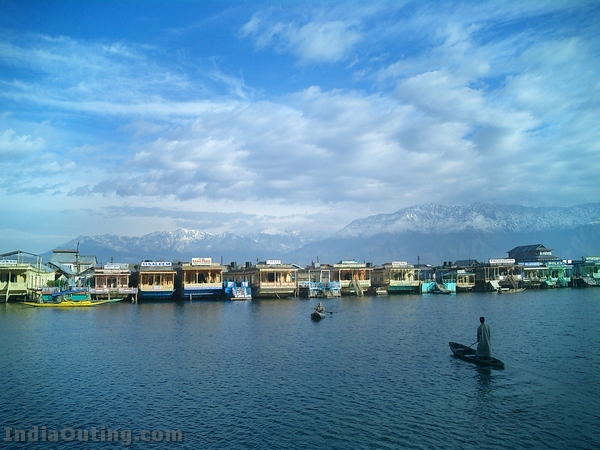
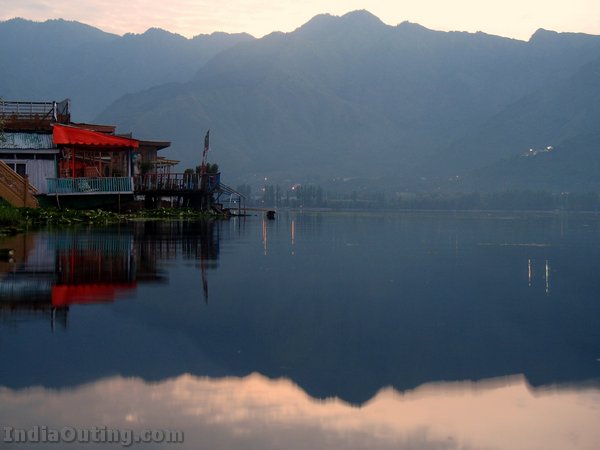
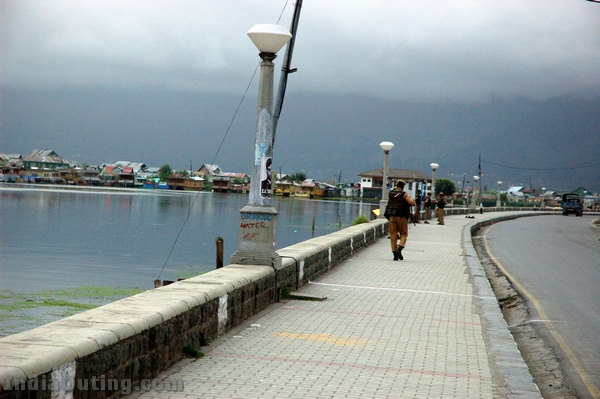
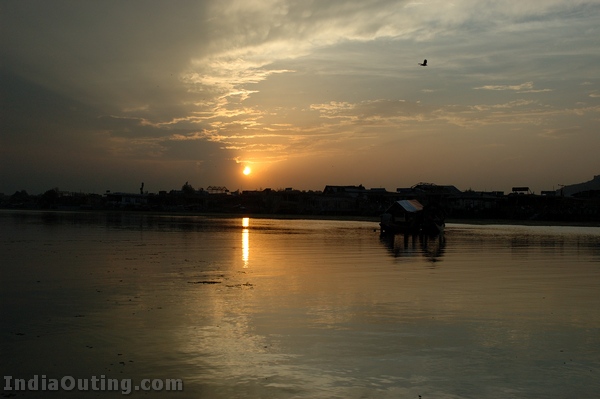
Srinagar pronunciation (Dogri: श्रीनगर; Kashmiri: سِرېنَگَر श्रीनगर), is the capital of the state of Jammu and Kashmir in India. It is situated in Kashmir Valley and lies on the banks of the Jhelum River, a tributary of the Indus. The city is famous for its lakes and houseboats. It is also known for traditional Kashmiri handicrafts and dry fruits. It is also the headquarters of Srinagar district

Etymologically Srinagar is composed of two Sanskrit words, namely, Sri (meaning abundance and wealth) and Nagar, which means a city. Thus, the word Srinagar signifies a place of wealth and abundance. Sri is also the name of a goddess Lakshmi of Hindus. A legend, as incorporated in Nila’s Nilmatapurana, states that the Kashmir valley was a vast lake. A Hindu sage named Kashyapa drained out the water, and there emerged the beautiful valley of Kashmir.

Srinagar

Srinagar

History

The city was founded by the King Pravarasena II over 2,000 years ago, and the city of Srinagar has a long history, dating back at least to the 3rd century BC. The city was then a part of the Maurya Empire, one of the largest empires of the Indian subcontinent. Ashoka introduced Buddhism to the Kashmir valley, and the adjoining regions around the city became a centre of Buddhism. In the 1st century, the region was under the control of Kushans and several rulers of this dynasty strengthened the Buddhist tradition.

Srinagar

Srinagar

Get In

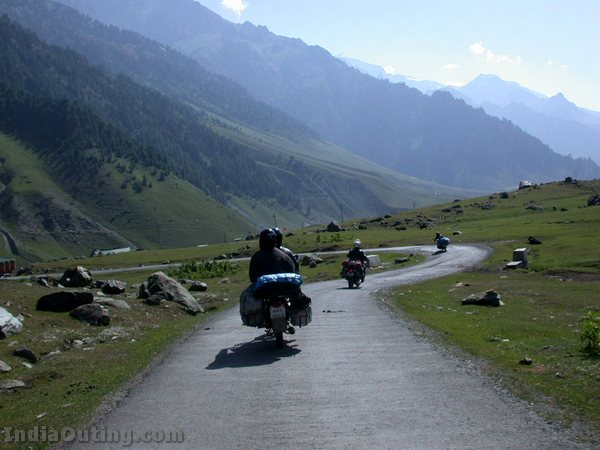
Many people take the train to Jammu followed by a taxi or bus ride to Srinagar. The journey from Jammu to Srinagar in costlier in the summers because capital is being shifted from Jammu to Srinagar on both the state buses and Sumos. State buses are safer but take more time and are a bit uncomfortable.

Foreign travelers on visas are required to register upon arrival at the airport or to their hotel or houseboat.

By air : Flights are operated by Jet Airways, Air Deccan, SpiceJet, Kingfisher Airlines, Go Air, Jet Lite and Indian Airlines [1] from Delhi and Mumbai to Srinagar, with or without a stopover at Jammu. The frequency is once or twice a day by each airline. The cost is approx Rs. 2,500 from Jammu, Rs. 2,500-5,000 from Delhi one way and higher from Mumbai, depending on the season. The airport is still quite small but the expanded terminal is expected to open soon. All flights originate in Delhi or Mumbai, pick up passengers and then return. It is also still heavily fortified and expect to see many soldiers with guns. Winter flights can easily be canceled due to weather conditions. Tickets are easy to purchase in town, but the airport requires a ticket for entrance. A taxi into town should be Rs. 350 and direct to Gulmarg is 1,200-1,500.

By taxi : Hiring a TATA Sumo SUV (fits up to 9 people, or 5 comfortably plus luggage) from Jammu costs approximately Rs.1,900-2,700 depending on time of year or even time of day. To reduce costs many people choose not to take an exclusive taxi, and share the Sumo taxi with other travellers. This costs about Rs. 150-400 per person. For a comfortable trip, try for a seat in the middle row – the front bucket seat is (sometimes uncomfortably) shared by 2 people, and the far back could be quite bumpy as the highway is full of mountainous roads. The journey takes around 8 hours.

By bus : J&K SRTC operates fairly comfortable buses from Jammu costing around Rs 150 and do the journey in around 12 hours. 2 day buses run between Srinagar and Leh staying overnight in Kargil.There are also direct buses from Delhi taking almost 24 hours to reach Srinagar.

Srinagar

Srinagar

See

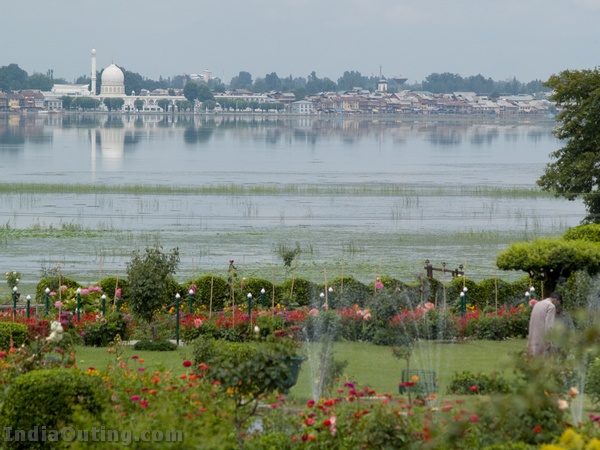
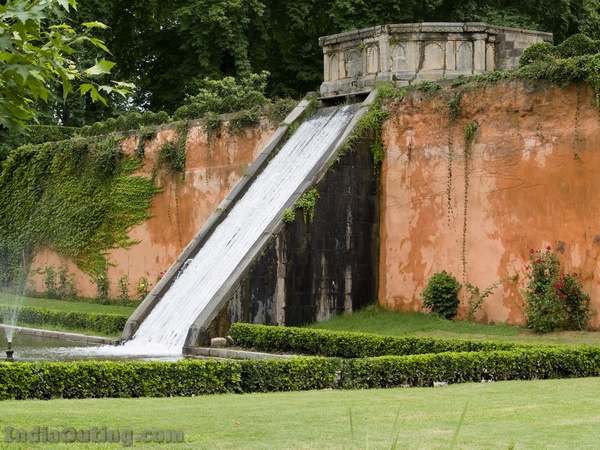
  • The Mughal Gardens. With terraced lawns, cascading fountains, paint-box-bright flowerbeds with the panorama of the Dal in front of them – the three Mughal Gardens of Chesmashahi, Nishat and Shalimar are the Mughal Emperors’ concept of paradise and are today very popular places for picnics and excursions. The beauty of these gardens is at their best during spring but the Mughal structure of these gardens lends them a unique sense of beauty even when the flowers are not blossoming.

Srinagar

Srinagar SrinagarSrinagar

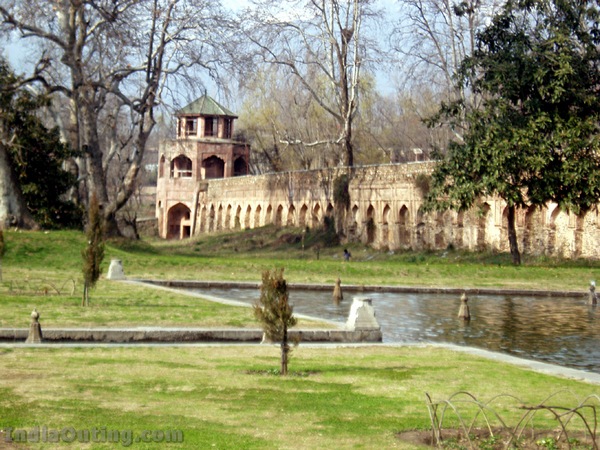
  • Nishat Bagh. Situated on the banks of the Dal Lake, with the Zabarwan Mountains as its backdrop, (11 km. from TRC), this ‘garden of bliss’ commands a magnificent view of the lake and the snow capped Pir Panjal mountain range which stands far away to the west of the valley. Nishat was designed in 1633 AD by Asaf Khan, brother of Nur Jehan.
  • Shalimar Bagh, the Moghul garden in front of the Dal lake built by Emperor Jahangir.

Srinagar

Srinagar

  • Chashmashahi is another beautiful Moghul garden.
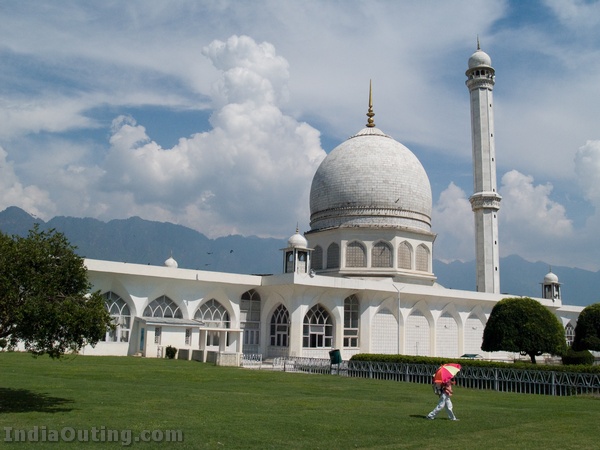
  • Hazratbal Mosque, the white mosque is breathtakingly beautiful but be careful, as women can enter only the first part of the mosque.
  • Ziarati Hazrati Youza Asouph, in the Khanyar area, about 150 meters NW of Dastgir Saheb mosque & shrine. This tomb, also known as Roza Bal, is believed by some to be the tomb of Jesus (part of the larger theory that he survived the crucifixion and made his way to Kashmir where he lived until at least the age of 100). It has been made popular by recent books such as Jesus Lived in India by Holger Kersten among others. It’s down a little side road – ask around, pretty much anyone in the area can point you in the right direction.

Srinagar

Srinagar

Srinagar

  • Shankaracharya Mandir, is a Hindu temple dedicated to Lord Shiva on a hilltop. It can be reached by a car or taxi. For security reasons, no cameras or cellphones are allowed within the temple and you are supposed to leave them in the vehicle before entering the temple premises. Cigarettes, liquor are to be deposited with the police personnel before the ascent of the hill as these items are against Hindu religion.

Srinagar

Srinagar

Buy

  • You can buy nice leather products, or jewellery. Cashmere (Pashmina) shawls have been manufactured in Kashmir for thousands of years. Pashmina Shawls are very popular items for sale in the Valley, but make sure to test the quality before purchasing. The test for a quality pashmina has been warmth, feel and the passing of the shawl through a wedding ring. Secondly, the weave pattern on a good Pashmina is fainter than on a “silk Pashmina” or other wool Pashmina.
  • You can also buy embroidered felt mats called Namdahs but the colours of the wool may be a bit too bright in most shops. The Government Emporia supplies might be better than the other private shops.
  • There are also chainstitch rugs in two styles – English design or Kilim design – it will be evident what is meant when you see them.
  • Carpets.

Srinagar

Srinagar

  • Paper Machie products are also quite unique to Kashmir with colourful motifs and design on them.
  • Kahwah is a traditional green tea recipe from Kashmir. The tea is made from green tea leaves with saffron strands, cinnamon bark and cardamom pods.Some varieties are made as a herbal infusion only, without the green tea leaves. Generally, it is served with sugar or honey, and crushed nuts, usually almonds or walnuts. There is another form of tea that is quite famous amongst the locals, its called ‘Namkeen Chai’ or ‘Nun Chai’. It is pink in color and is also called Pink Tea. It is made from black tea, cardamom, various spices, salt and bicarbonate of soda. Also people like nune toath and dum toath which are very famous among sufis. Nunetoath is nunechai without milk and Dumtoath is strong form of Kahwa.

Srinagar

Srinagar

Srinagar

Haridwar – Gateway to God

tour of haridwar

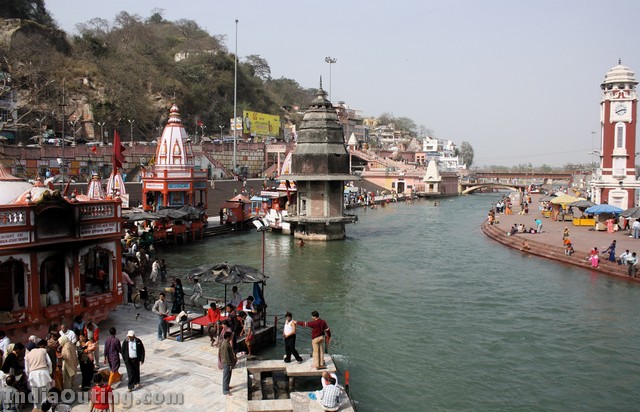
Haridwar (हरिद्वार), also spelled Hardwar, is a city in the state of Uttarakhand. Haridwar, literally Gateway to God, is one of the Hindu holy places in India and a center of Hindu religion and mysticism for centuries. Located on the banks of River Ganges (Ganga), at the point where the Ganges descends from the hills to the North Indian plains, Haridwar attracts a large number of Hindu pilgrims from all over the world.

Haridwar

Haridwar

Festivals

Haridwar is the site of many religious festivals. Most notably, once every twelve years it is the venue for the Kumbh Mela, humanity’s largest festival, which drew a record 70 million in 2003. (The festival rotates between Haridwar and Allahabad, Ujjain and Nashik.) The Ardh Mela, or “half mela”, is held every six years. Both will be held in Haridwar for the next time in 2010.

Other yearly festivals include:

  • Baisakhi, April.
  • Kanwar Mela, July. The largest yearly festival, drawing up to 300,000 visitors.
  • Somwati Amavasya, July. Almost as large as the Kanwar Mela.
  • Kartik Purnima, held 15 days after Diwali on the first night of the full moon in November.

See the Haridwar city website for a complete listing. While the festivals are colorful and fascinating, they also strain the town’s limited infrastructure to the breaking point and sometimes beyond. Book rooms and tickets well in advance, and avoid travel by road as the traffic jams can be horrendous.

Get inHaridwar is about 200 kms from Delhi, the capital of India and is well connected by road and rail network from all parts of India. It is better to avoid travelling to Haridwar during the hindu month of sawan (around july) since there is a heavy crowd and all important roads are blocked and most of the hotels/busses/trains are crowded.

By plane

Dehradun’s Jolly Grant airport, with twice daily service to Delhi on Air Deccan , is 20 km from Haridwar.

By train

Haridwar Junction (IR station code : HW) is well-connected by train. The railway station is located on the south side of the town, within walking distance of most hotels.

By bus

Haridwar’s bus station, a stone’s throw from the train station, is chaotic and has no signage whatsoever in English. There are regular bus services from Delhi (4-5 hours), Rishikesh (1 hour) and other important towns of North India to Haridwar. Though they claim they reach New Delhi in 4-5 hours they take at least 6-7 hours. Due to the traffic jams in the roads leading in and out of Delhi it can even take 7-8 hours. Before booking the bus check the bus condition. Always go for cushioned and push-back seats. The long and bumpy ride will take a toll on your mood and body.

Haridwar

Haridwar

Haridwar

Get around

Central Haridwar can be reasonably comfortably covered on foot. Cyclerickshaws abound, and most trips in town should not cost more than Rs. 20. Taxis and autorickshaws congregate at the train and bus stations.

See
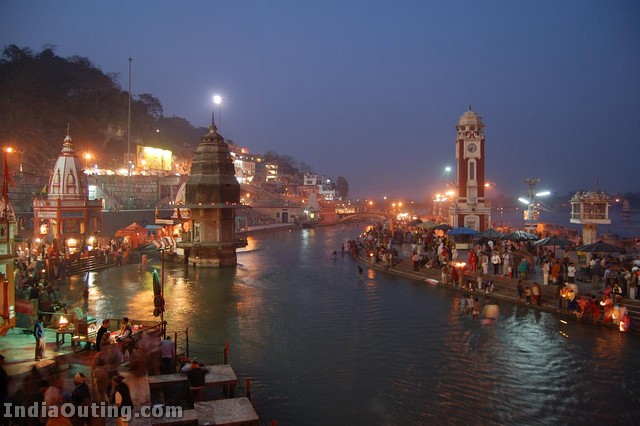
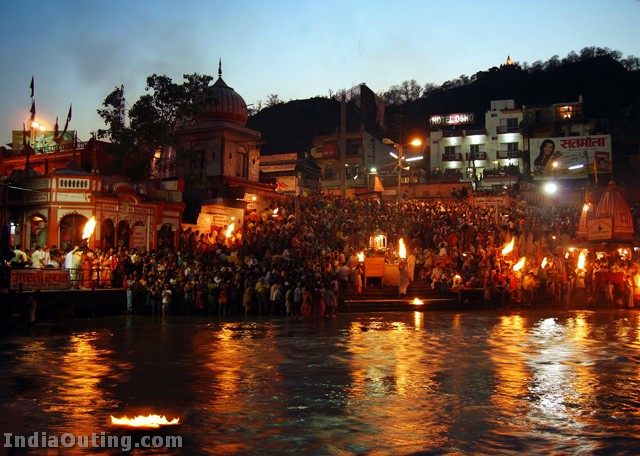
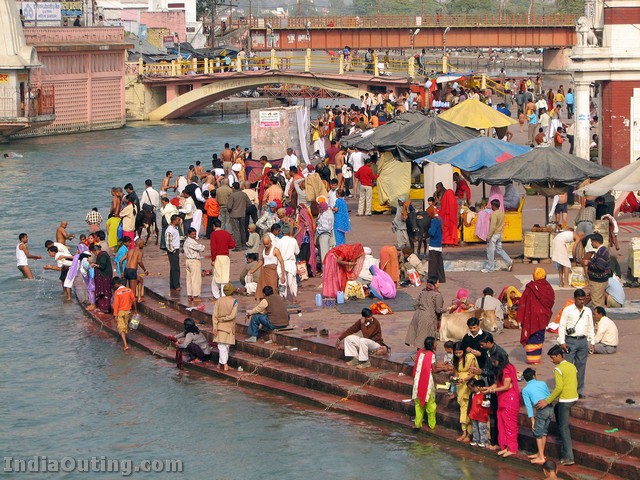
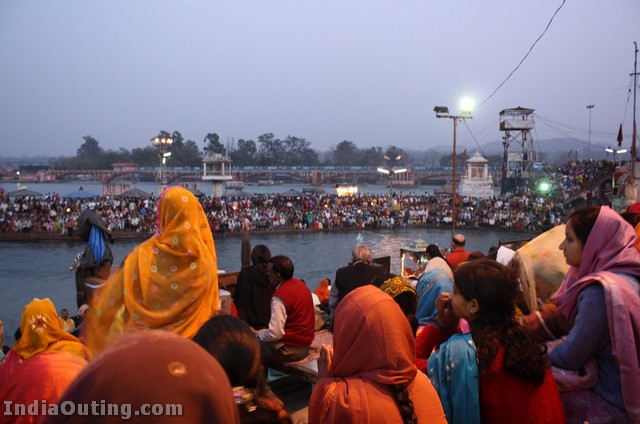
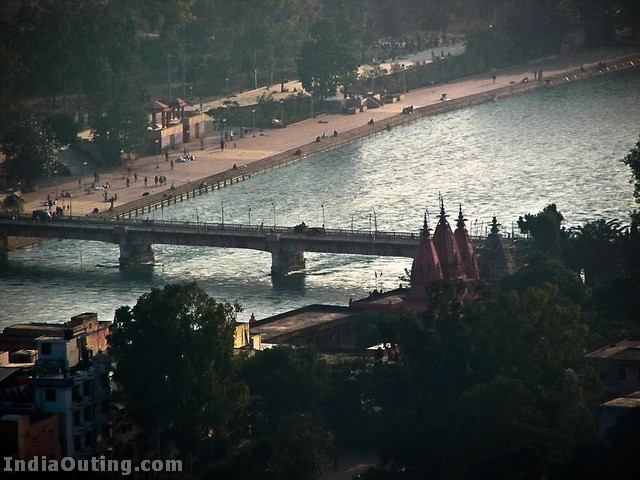
  • Hari-ki-Pairi (or Har-ki-Pairi). To the north of the center, this is Haridwar’s focal point, where devotees gather to bathe and worship on the Ganges. According to legend, this is where a drop of nectar fell from the churning of the oceans when the world was created, and a stone wall has Vishnu’s footprint. Each evening around 7 PM, thousands gather and worship the river Goddess by putting diyas (floating lamps) in the river. You may be asked to make a donation if you linger near the ghats. Beware of con artists posing as officials. If you would like to make a donation there are boxes at the center of the ghats around the light poles.
  • Maya Devi Mandir , located on upper road. This temple is one of the 51 “shakti peeths” and its the presiding deity of Haridwar. It is from this temple Haridwar derives its other name Mayapur.
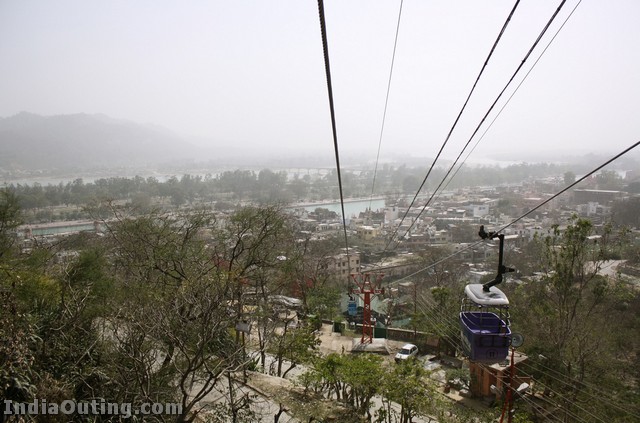
  • Mansa Devi Mandir, atop a hill near the center of town. Can be reached by cable car (Rs 48 for a return ticket) or by a road that gently winds uphill (about 2 km), starting from Railway Rd. The temple is aesthetically not particularly noteworthy, but the views are grand. Expect to queue to board the cable car and once more to enter the temple: despite some rudimentary attempts at crowd control, the crowds of jostling devotees can make this a pretty intense experience.
  • Bharat Mata Mandir, 5 km north of the center. Dedicated to Mother India, this is half temple, half nation building exercise, with seven floors stacked with deities, saints, and secular heroes of all Indian faiths. Some signage in English.
  • Chandidevi Mandir,8-9KM from railway station, you get the combi package to see both the temples by AC bus including bus and ropeway charges
  • Daksh mandir,7-8 km from railway station,you get rickshaw or you can hire a auto,near also many mandirs to see at kankhal.
  • Bilkeshwar Mahadev Mandir , Shiva temple located on a hill.
  • Vaishno Devi Mandir
  • Ma Anandamayee Ashram, Located at Kankhal. The samadhi of Shree Shree Ma Anandamayee is located here and is also the Head Office of the revered organisation. It is a must see. Devotees included late Mrs Indira Gandhi (ex Prime Minister of India). Attend the evening aarti near Ma’s samadhi and have a soul cleansing experience.

Haridwar

Haridwar

Haridwar

Do
  • Divya Yog Mandir Trust University, 16 km from Haridvar. Founded by Baba Ramdev.
Buy

Haridwar, the holy city is one of the most renowned pilgrimage centers in India. Pilgrims from all over the world flock to this sacred city to take a dip in the holy waters of River Ganga.Being a destination for pilgrimage tourism, shopping in Haridwar is not on the itinerary of the tourist.

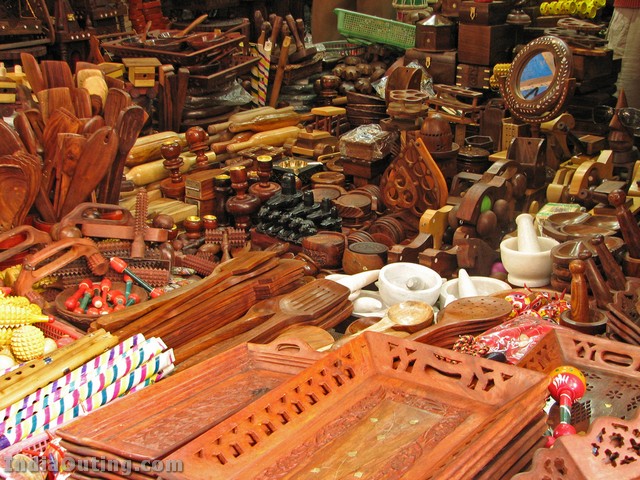
However shops in Haridwar have some interesting things to offer to the tourist. The main shopping centers are Moti bazaar, Upper Road, Jwalapur and Kankhal. You can also check out the Government Handloom and Handicrafts Emporiums and the Gandhi Ashram. Here you will find a range of handicraft decorative pieces. If you are interested in jewellery, then you can choose from a variety of imitation ones which make good fashion accessory.

In Haridwar, you will find neatly and intricately carved stone idols, which make unique souvenirs. It is fascinating that these stones have traversed with Ganga all along and they are eventually deposited in Rishikesh as the river enters the plains. This gives the stones amazing shapes and a natural polish. Besides idols, there are kitchen set toys made from stone, which are interesting buys.

Haridwar

Haridwar